Australia’s Property Market in 2026: Why Interest Rates Didn’t Tell the Whole Story


Three years ago, when almost everyone was arguing about when interest rates would drop, PRD made a bold prediction: interest rates are only one small piece of the puzzle, and a severe shortage of homes will matter much more in the end.
Now that we are in 2026, that prediction has become everyday reality.
Even with rate changes making headlines, property prices across Australia have stayed resilient. The reason is simple: we aren't building enough homes for our growing population, first-home buyers are borrowing record amounts just to get through the door, and rental vacancies have plunged to an ultra-tight 1.4%.
In our 2023 Australian Economic and Property Report, we introduced the idea of "multiple layers" to explain that property doesn't move on interest rates alone. Instead, your local market is shaped by how jobs, bank lending, population changes, and the supply of actual homes collide.
It was a simple way of showing something quite complex. Each layer influences the others, and the combination can produce very different property conditions from one market to another.
Three years later, that idea still makes a lot of sense. Here is why those layers still matter today, and what the latest numbers mean for Australians.
Why Rate Cuts Can’t Fix a Shortage of Homes
For years, conventional wisdom said that if interest rates rise, home prices must crash. But as PRD pointed out back in 2023, that rule breaks down when you simply don't have enough roofs over people's heads.
When population growth surges and new construction stalls, a lack of homes overpowers borrowing costs.
That is why building more homes isn't as easy as politicians making promises:
- Building costs have surged: Materials and labour remain expensive.
- Red tape causes delays: Getting approvals through local councils still takes months or years.
- Builder shortages: Many building companies have folded or don't have the staff to take on new projects.
Because brand-new homes aren't arriving fast enough to meet demand, competition for existing homes stays fierce. Looking at interest rates by themselves never gives you the full picture.
Affordability Is More Than Just the Price Tag
When people talk about affordability, they usually focus on the sticker price of a home. But for an average family budget, affordability is really about:
- How much the bank will lend you
- Your monthly mortgage repayments
- How much rent you are paying while trying to save a deposit
- Rising bills, groceries, and daily living expenses
PRD’s 2023 report warned that the squeeze on household budgets was building up. The latest 2026 figures from the Real Estate Institute of Australia (REIA) prove that the pressure has hit new highs:
- Repayments take half the family pay cheque: In mid-2023, meeting average home loan repayments ate up 45.5% of a family’s income. By mid-2026, that figure jumped to 50.9%, meaning more than half of a household's take-home pay goes straight to the mortgage.
- First-home buyers are taking on $111,000 more debt: Over the last three years, the average loan taken out by a first-home buyer climbed from $498,411 to $610,063.
- Buyers are still determined to get in: Despite these higher repayments, first-home buyer numbers haven't dropped off (30,129 buyers in mid-2026 compared to 28,578 in 2023). Everyday Australians are willing to stretch their budgets to breaking point just to secure a home.
What First-Home Buyers Are Facing (2023 vs. 2026)
Housing affordability and first home buyer lending, June quarters 2023–2026. Source: Real Estate Institute of Australia (REIA), Housing Affordability Report.
Adding fuel to the fire is the rental market. Across Australia, only 1.4% of rental homes were vacant in September 2026. Experts consider 3.0% to be a healthy, balanced market where tenants have realistic choices. With rentals so scarce, many renters are choosing to buy sooner than planned, even if it means borrowing to their limit—just to escape endless rent hikes.
It’s Not Just How Many Homes We Build… It’s What Kind
Solving Australia’s housing crunch isn't just about building rows of traditional four-bedroom houses on large blocks.
Australian households look very different today than they did a decade ago. We have more single-person households, couples without children, retirees downsizing, and multi-generational families choosing to live under one roof.
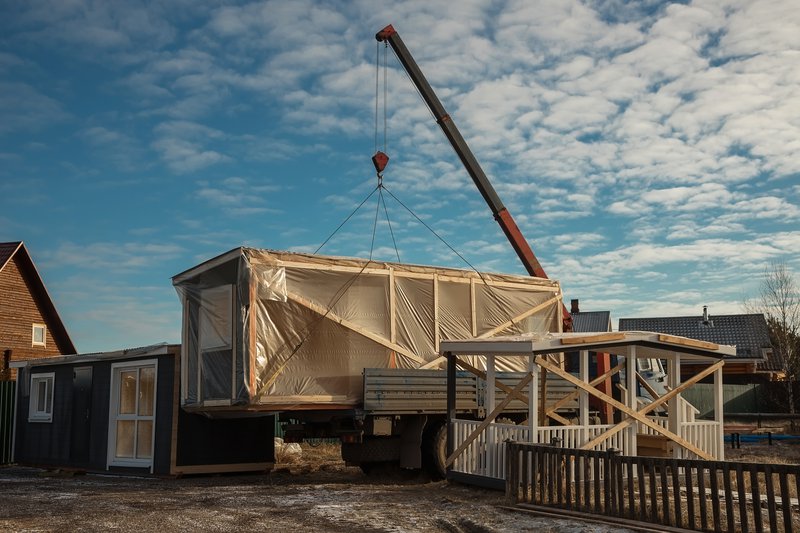
Back in 2023, PRD argued that we need a wider mix of housing options, including: townhouses, duplexes, granny flats, build-to-rent projects, and high-quality family apartments. We revisited this in our Modern Methods of Construction 2026 Report, urging Australia to embrace prefabricated and factory-built homes to build faster, smarter, and cheaper.
Simply building more houses on the distant edges of our cities won't fix affordability if those homes are in the wrong spots or don't match what local families actually need.

One National Headline Doesn’t Tell the Whole Story
If there is one key lesson for property buyers, sellers, and renters in 2026, it is this: never base your property decisions on a generic national headline.
Interest rate changes apply to the entire country at once. But local property markets don't all behave the same way:
- A quiet regional town welcoming new manufacturing jobs and zero new housing developments will see strong price growth.
- An inner-city pocket with thousands of brand-new apartments hitting the market at once might see prices soften.
- An outer suburb where council approvals move slowly will face much tighter buyer competition than an area with abundant land releases.
This is why PRD’s "multiple layers" approach matters so much. To understand what is really going to happen in your neighbourhood, you have to look past the broad national news and examine the local mix of jobs, population growth, and housing supply.
Explore PRD’s latest property insights
From national trends to what’s happening in local markets, PRD continues to look beyond the media headlines to understand what’s really shaping Australian property across every market.
Explore our latest insights and discover what the data is really telling us about Australian property across the country for 2026 and beyond.
Or, get in touch with your local PRD office to book in a time to get an overview of what’s actually happening in your market.